Aerial Fire Fighting Safety Awareness Training
Course Aim
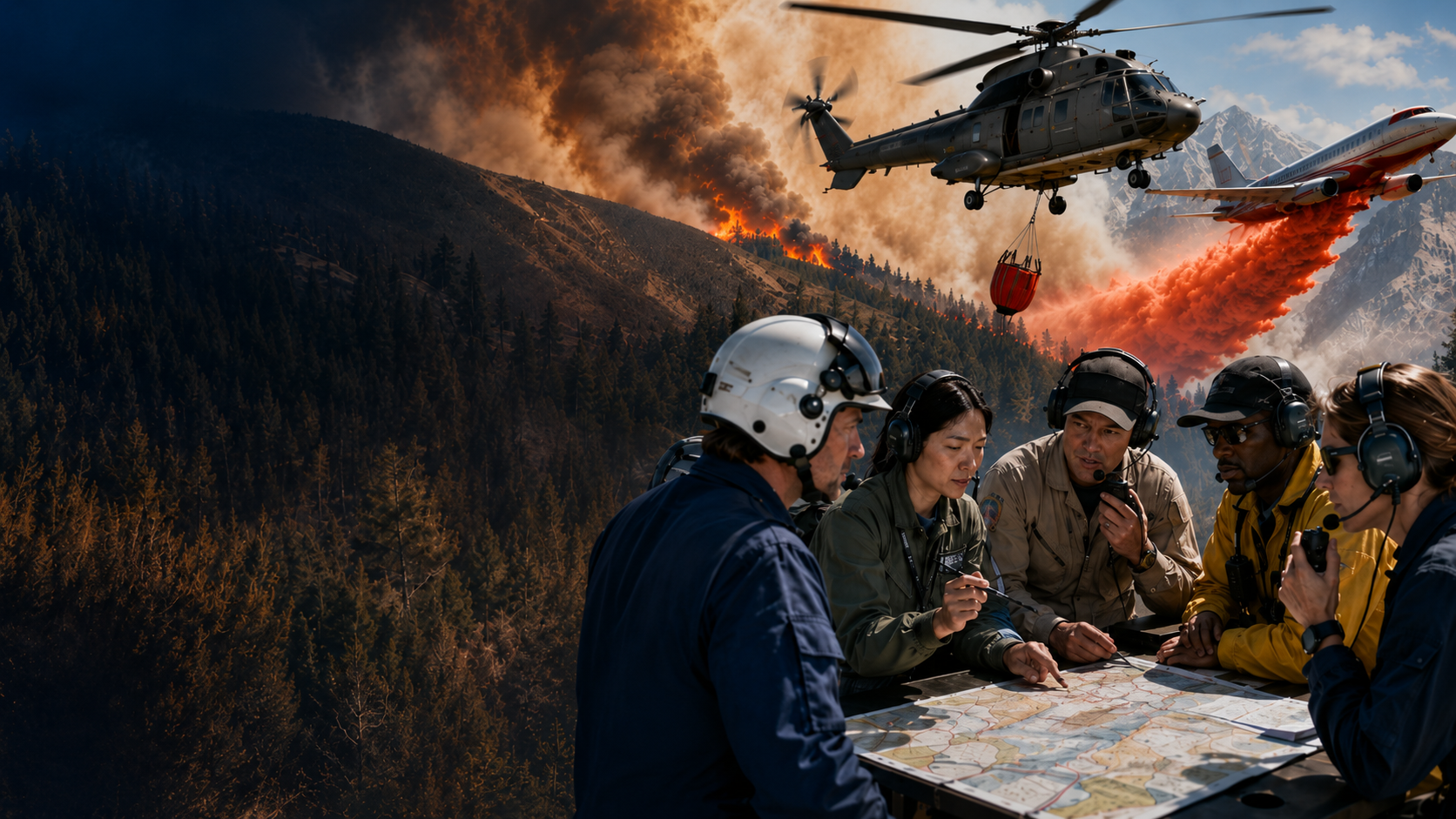
To improve pilot recognition and management of the operational Threats, Errors and Undesired Aircraft/Helicopter States unique to aerial firefighting, and to strengthen the individual, crew and system barriers that prevent normal operational variability from progressing to loss of control, collision with terrain, external-load accidents, separation events or other serious outcomes.
Who should attend?
Pilots & Co-Pilots
Fixed-wing and rotary-wing crews operating in AFF missions.
Air Attack / Birddog
AAS, lead-plane and tactical coordination personnel.
Operations & Safety
Chief pilots, managers, instructors, safety and SMS personnel.
Agencies & Contractors
Fire agencies, contracting authorities and operational assurance teams.
The AFF FOOP learning model
1. Threat
Smoke, terrain, turbulence, task pressure, traffic, equipment complexity, workload.
2. Error
Mismanaged profile, weak monitoring, incorrect configuration, delayed abort, poor communication.
4. Recovery
Recognise early, communicate, restore margins, jettison or go around when required, debrief and learn.
Platform-specific training
The program shares one safety philosophy while preserving the very different operational risks of fixed-wing tanker and helicopter firefighting missions.
Fixed-Wing AFF
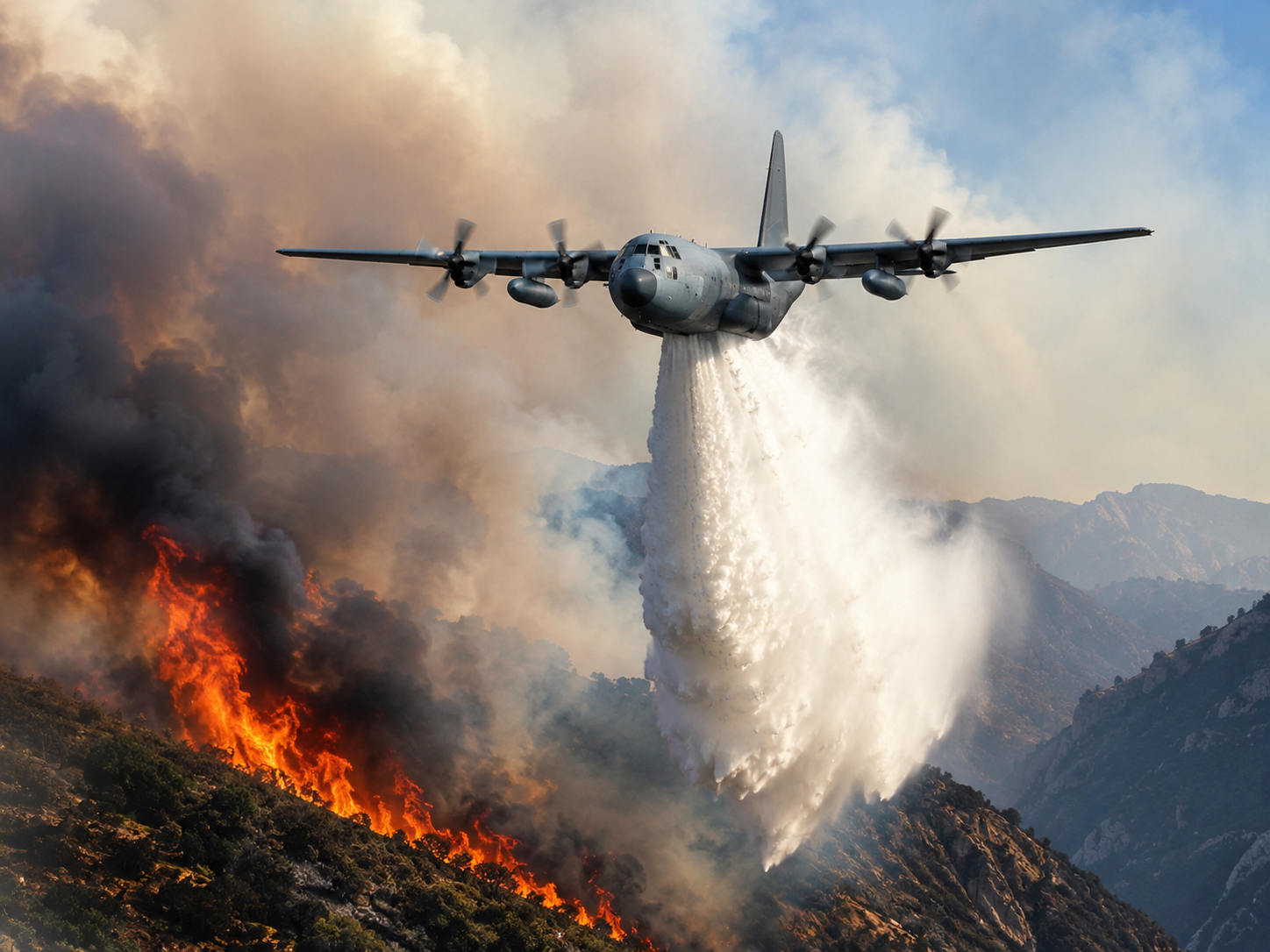
Large Air Tankers, SEATs & Scooping Aircraft
- Mission acceptance, planning and risk assessment
- Fire weather, turbulence, windshear and terrain
- Low-level drop profiles and energy management
- Drop height, speed, thrust and sink-rate awareness
- Partial loads and performance changes
- Scooping operations and water-bomber hazards
- CFIT prevention and escape-path verification
- Air attack, Birddog and incident-airspace coordination
Helicopter AFF
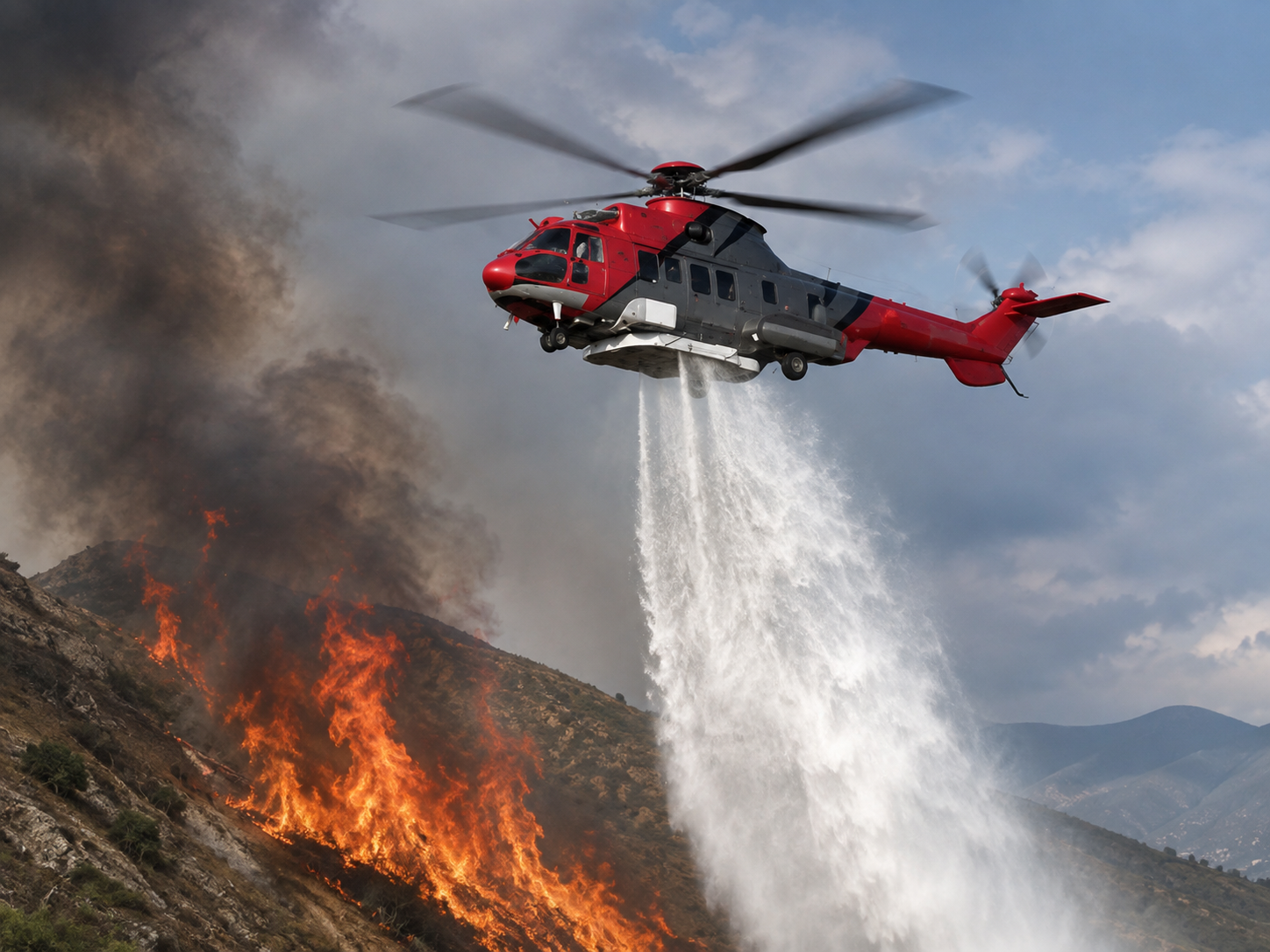
Bucket, Longline, Tank & Snorkel Operations
- External-load and longline hazards
- Clear-to-lift and positive ground confirmation
- Bucket/cable/skid entanglement prevention
- Emergency load release and jettison readiness
- Engine failure, autorotation and rotor-energy management
- Dip-site and snorkel operations
- Hover, power-margin and high-density-altitude threats
- Ground crew, signal person and helibase interfaces
Course Layout and Syllabus
Each module can combine narrated content, diagrams, incident reconstruction, knowledge checks, scenario decisions and downloadable operational tools.